WORKERS’ TESTIMONIES
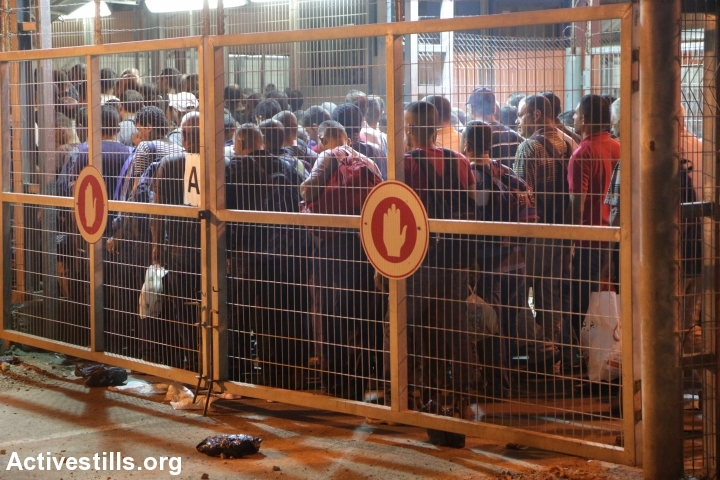
Testimony documented through the Southern Electricity Workers’ Union
Yousri Abu Qbeita, a worker from Hebron in his 30s, worked as a driver transporting workers every day to their workplaces, especially workers employed inside Israel. Like many Palestinian workers, he would leave home early each morning to earn a livelihood despite the dangers faced daily on the roads, at checkpoints, and from increasing settler violence targeting Palestinian workers.
On one of those mornings, while transporting workers near a village entrance in in Masafer Yatta in the Hebron governorate, settlers intercepted the vehicle he was driving and opened live fire toward it. In an attempt to escape the attack and protect the workers in the vehicle with him, Yasser turned onto dirt roads, but the settlers continued shooting at the vehicle, targeting its tires and those inside. As a result, the car overturned. Read more
Testimony from tourism and hotel sector worker, archaeological guide
I am Shaimaa Mohammad Shaker Al-Natour, a 32-year-old woman from Gaza. Before the war, I lived with my family of five in Al-Shati Camp in a small and beautiful house that held all the details of our daily life. I graduated in History and Archaeology and worked in the tourism and hotel sector as an archaeological guide from 2014 until 2023. I was building my future and trying to create a stable life in my country. I am divorced and lived with my parents and family.
Suddenly, this painful war happened. I lost my work and the only source of income for me and my family disappeared. My father was working as a teacher at Dar Al-Arqam private school, but his work also stopped because of the war, and he did not even obtain his labor rights. Since then, our family has had no source of income except for very limited support from one of my brothers, who has a small street stall.
Our small beautiful home was destroyed, and we were displaced from Gaza City to Deir Al-Balah. We rented a small piece of land for 400 shekels monthly and pay another 100 shekels just to secure water. On that land, we built a tent to shelter us and shelter the dreams that disappeared in one moment.. Read more
Testimony from a Kindergarten worker and Head of the Kindergarten Workers’ Union in the Gaza Strip
I am Nihad Muhareb Joudeh, originally from Rafah. From 2017, I worked in Al-Ahmad Kindergarten together with other teachers, and all of us were supporting large families through this work. One of our colleagues was suffering from cancer. The kindergarten was not only our workplace, it was our dream and our only source of income. By the end of 2023, the kindergarten had around 100 children enrolled.
The kindergarten in Rafah was completely destroyed with all its contents. Since 2024, we, like all the residents of Rafah, have been displaced to Al-Mawasi area in Khan Younis. Today we live a life of humiliation in tents with our families. My family consists of 20 people: myself, my sick husband, my daughters, my son and his small children, and my divorced daughter with her children. The tent we live in is extremely small for all of us. Read more
Testimony from a cleaning worker at AL SHifa hospital in Gaza

I am Asaad Maher Al-Aswad, 35 years old, married, and responsible for supporting a family of six members, in addition to my parents and my two sisters with disabilities, aged 23 and 25. I used to live in Al-Karama area in Gaza, before it was completely destroyed.
Before the war, I worked as a cleaning worker at Al-Shifa Hospital through a private company, earning a monthly salary of 700 shekels [about 175 euros at the time]. My work was difficult, but it was the only source of income for my family. When the war began, everything changed. Work at the hospital stopped in November 2023, and we were never paid our salaries for September and October 2023. Since then, I have lost the only income that supported my family.
Testimony from a Director of Rowad Al-Mustaqbal Kindergarten and Teacher – Betlehem
Our kindergarten is a place that we always tried to make safe, but this is no longer the possible. The general atmosphere of tension, the sudden sounds of rockets, and the raids carried out by the Israeli occupation army at any time have created fear and panic among the children, and this feeling has spread among all of them in one way or another. We started noticing anxiety in their behavior, fear in their reactions, and even in the simplest daily details.
All of this cannot be separated from the difficult economic reality. Families were directly affected, and this reflected on parents’ ability to pay school fees, which in turn affected the ability of kindergartens to continue at the same level. Today, kindergartens are trying to balance between continuing their work and providing the minimum level of stability for children despite all the challenges. Read more
Testimony of Palestinian worker from Tulkarem refugee camp
I worked as an educator and owner of a private educational center, and like many others, I suddenly lost both my stability and my work because of the displacement. Leaving our home was extremely painful. We left behind not only our belongings, but also the place that carried our memories, daily life, and sense of security. Read more
Video testimony of a former Palestinian worker in illegal Israeli settlement built on stolen Palestinian land of Salfit.
Why Europe needs to ban trade with illegal Israeli settlements – a letter from a Palestinian farmer
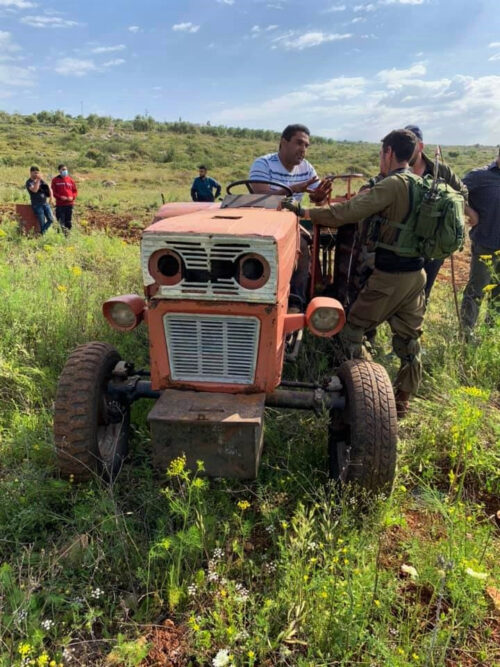
Two different legal systems are applied by Israel in the same geographical area, favouring Israeli settlers over the Palestinians who live just a few hundred meters away. Due to the continuous expansion of the settlements, I am afraid that I will no longer be able to enter my farm and cultivate it as I used to. It could end up annexed to an Israeli settlement, in preparation for the transfer of its ownership to Israeli settlers. Read more...
The situation of Palestinian workers – Manal Shqair (New Unions)
Since the start of last April 2022, Israeli colonial authorities have been clamping down on Palestinian workers and the Palestinian people of the West Bank. This is exacerbated for Palestinian workers who work for Israeli corporations without permits. Lately, there has been an Israeli crackdown and blockade on the ‘open part’ of the Separation wall, which for years has been the route for tens of thousands of Palestinian workers who -despite being denied the Israeli permit – still crossed the border to go to work and access their main source of income. The need for Palestinian workers to cross the ‘border’ is a direct consequence of Israel’s systematic strangulation of the Palestinian economy and this crackdown on ‘illegal workers’ embodies yet another layer of systemic oppression on Palestinians who were forcibly made reliant on Israeli jobs. Read more…